
What to evaluate
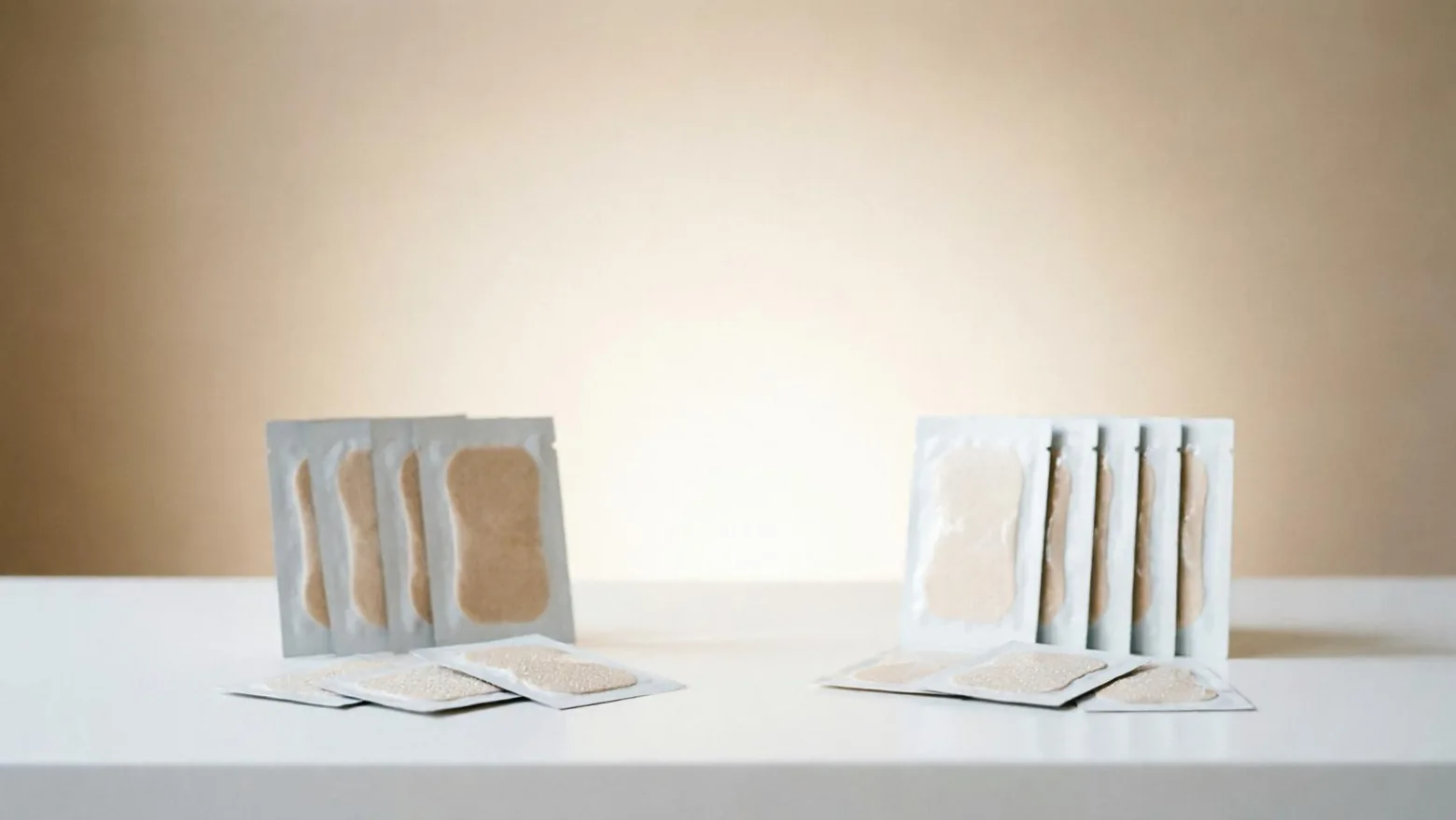
Individual packaging should preserve patch identification while protecting its geometry. Define whether one retail unit contains one patch, a paired format or multiple separately sealed pieces. The primary pack drawing should show the cavity or support, liner orientation and location for lot information. A carton count should be consistent with the physical units delivered.
Planning the next decision
Ask for the proposed package materials and the evaluation needed for the actual formula and distribution route. A decorative outer carton does not answer moisture or compression questions. Compare opening convenience using identified mock-ups before approving artwork. If the brand later changes the pack count, review whether protection, traceability and instructions remain clear. Packaging decisions should be part of the development brief rather than the final cosmetic task after samples are accepted.
Control movement inside the protective cavity
A small patch can move within an oversized cavity even when the outer pouch remains intact. Tilt, rotation or contact with the lid can affect the delicate region. A protective design should identify the support surface and the space reserved around the array. The cavity also needs a practical lifting route so that unpacking does not require gripping the functional area. These requirements can conflict: a tighter fit may reduce movement while making removal harder. The package review should examine that trade-off using the actual assembled patch and expected component tolerances. A drawing of the empty tray alone cannot show whether the complete product will remain supported throughout handling.
Opening one unit should not expose the rest unintentionally
A retail presentation containing several patches can use separate primary packs or a shared container. Those architectures create different exposure and handling questions. If opening one compartment exposes several units, the remaining units may experience a different environment from an unopened pack. The product description should state the counted unit and the protective arrangement clearly, without assuming that a resealable outer bag restores the original condition. An illustrative packaging comparison can map which seal is broken at each step and which units become exposed. That map helps a buyer understand the practical consequences of a presentation choice. Shelf-life and handling statements should then be based on the selected architecture and appropriate evidence, rather than on the appearance of a premium carton.